Medical practices and therapy centres: arriving without getting lost.
For many people a visit to a practice begins with uncertainty: where is the entrance, what does it look like inside, can I get in with a walking aid? A tour answers that beforehand.
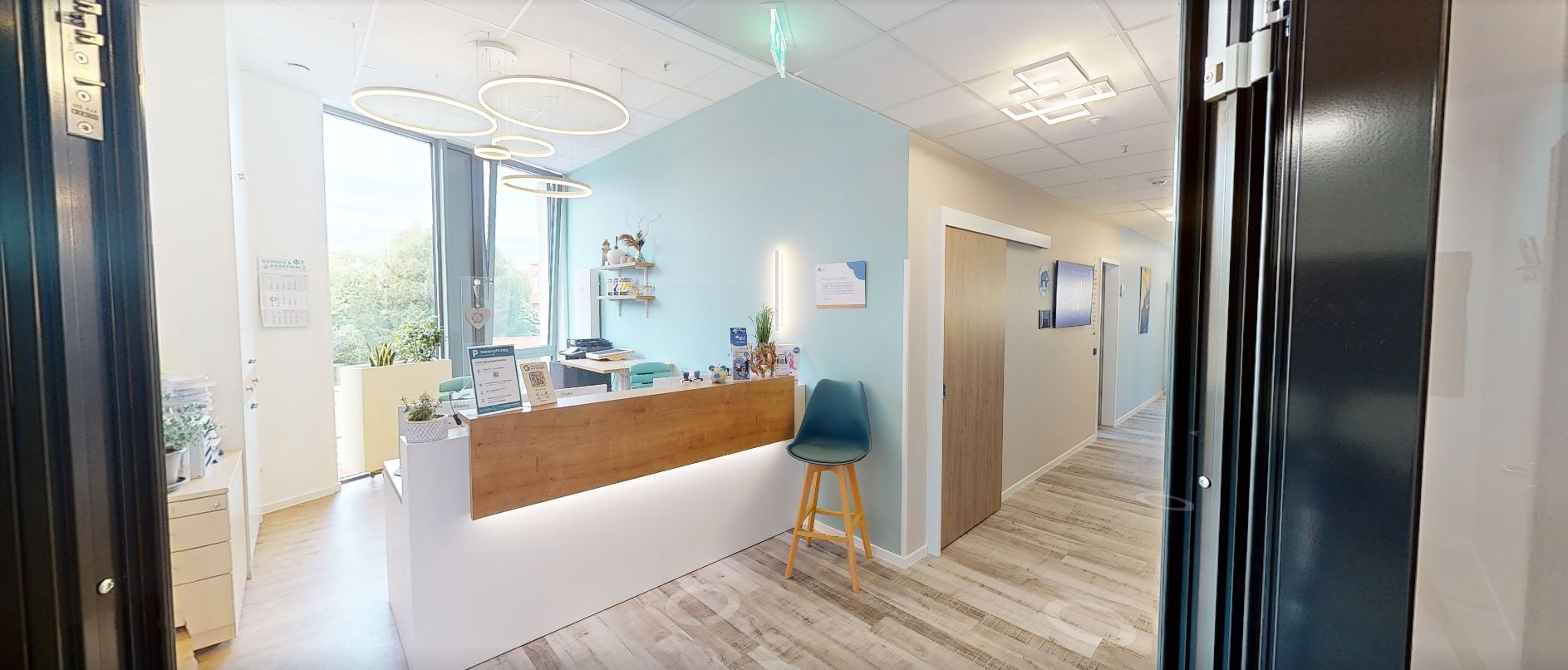
get.Therapie Löwentor, Wolfenbüttel
Reception, waiting area and training floors of a therapy centre — captured outside treatment hours.
What practices use a tour for
- Patients
The apprehension before a first appointment
Especially in dental, psychotherapy and paediatric practices, a familiar sight lowers the barrier. Knowing the waiting area makes arriving easier.
- Accessibility
Demonstrating access visibly
Instead of claiming to be “accessible”, show the entrance, door widths and routes. Patients using mobility aids can judge for themselves.
- Orientation
The way to the right room
In larger therapy centres and group practices, the tour shows where each department is — noticeably relieving the front desk.
- Recruitment
An argument in job adverts
Applicants see their future workplace before applying. With staff shortages, an underrated advantage.
In healthcare this is rarely about marketing in the classic sense. It is about removing people’s uncertainty before an appointment — and about information that otherwise has to be explained on the phone again and again.
A tour handles both. It shows what your practice looks like, where the entrance is and whether the route works with a walking aid. That relieves reception and makes the first visit easier for patients.
What patients see in a practice tour
The tour can start where the real visit starts: at the front door, the lift or the reception desk. From there, patients move through the rooms you choose to show and look around in every direction. The dollhouse view shows the practice as a whole, and the floor plan makes clear which floor and which corridor a room is on. For relatives accompanying an older person, steps, lift and door widths are what count — with the measuring tool they can check in advance whether a wheelchair or rollator will fit through the door.
What makes sense depends on the specialty. A paediatric practice shows the waiting room with its play corner, a psychotherapy practice rather the quiet entrance and a consulting room. A therapy centre with a training floor shows equipment and exercise rooms, so patients know what to expect at their first session.
Many calls to reception are not about appointments but about directions: where can I park, which entrance, which floor, where do I check in for physiotherapy? A link to the tour answers these questions once for everyone, instead of explaining them on the phone every day.
Where the tour is used
- Website: on the page about the practice or directions, embedded with a preview image. The tour only loads after a click.
- Appointment confirmation: as a link in the email to new patients, together with directions.
- Google: as a Street View interior in your business profile, where many patients look up address and opening hours.
- Job adverts: applicants look at different rooms from patients — treatment stations, equipment, the staff room. The link in the advert answers questions that otherwise only come up late in the interview.
- Relocation or new opening: regular patients find their way around new premises faster if they already know the route.
Info points in the tour link to online booking, medical history forms or notes on parking and the lift. Such links can also be adjusted later, for instance when your booking system changes.
What matters during capture
Rooms that are not to be shown stay closed; the others should be tidy and well lit. Treatment rooms are best shown as examples, with no paperwork on the desk. Doors to the rooms that appear stay open during capture, so the route remains walkable throughout. Dated notices and holiday announcements are best taken down — they go out of date faster than the tour.
During the walk-through we decide together which areas are captured. In group practices, all the practices involved can agree on this beforehand instead of being surprised by the selection afterwards.
Frequently asked questions
Your question is not listed? Ask us directly.
What about patient data and confidentiality?
We recommend an appointment outside consultation hours, with no patients on the premises. Put files, appointment lists and screens away or switch them off beforehand.
Which rooms should be captured?
Typically the entrance, reception, waiting area and sample treatment rooms. Areas with sensitive equipment or patient data are deliberately left out — usually an advantage rather than a limitation.
Are there advertising-law restrictions?
A tour shows your premises, not treatment outcomes, which is unproblematic in most jurisdictions. Caution applies to before-and-after imagery and efficacy claims; we do not embed such content. When in doubt, check the wording with your professional body.
How long does the capture take?
That depends on floor area and layout: a single-floor practice is captured faster than a therapy centre spread over several levels. We clarify the time needed during the walk-through. Larger centres can be captured area by area and spread over several appointments.