Retail: the shop that never closes.
Bricks-and-mortar retail competes with sellers who are open 24 hours. A tour gives your shop the same availability — without building a warehouse or shipping parcels.
VEDES toy shop
For a VEDES retailer in Goslar we captured the shop as a virtual tour and made products clickable within the space. Matterport published the project as an official case study — an example of bricks-and-mortar retail gaining digital visibility without becoming an online shop.

What a tour achieves in retail
- Visibility
Before the trip to the shop
Customers see the shop floor, the breadth of your range and the ambience before setting off. For specialist retailers that often decides whether anyone comes at all.
- Range
Products clickable in the room
Info points on shelves and displays lead straight to a product page, data sheet or shop. The tour turns from a shop window into a sales channel.
- Space
Making large floors comprehensible
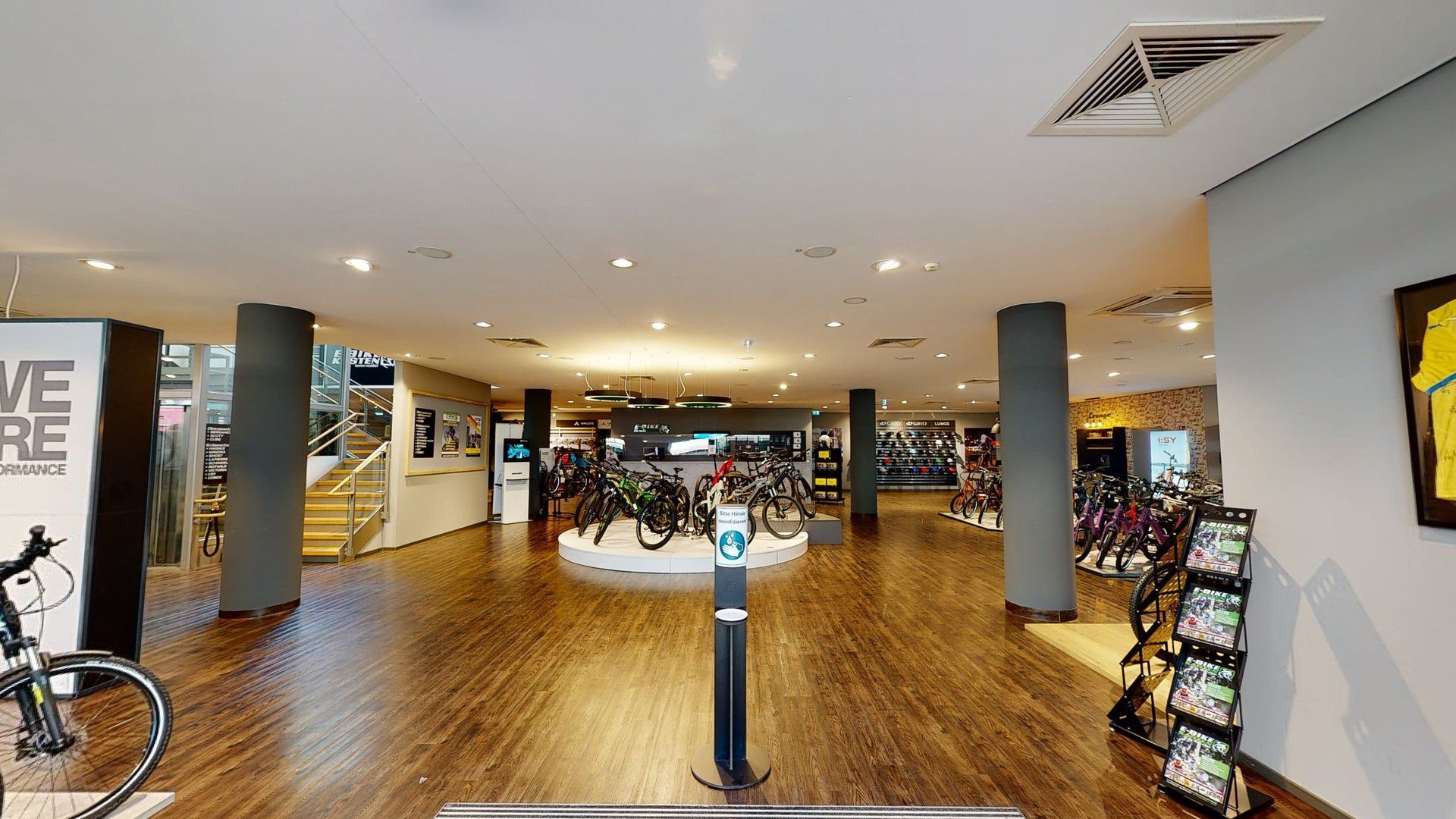
Car dealerships, caravan dealers, bike shops: where stock spreads across a large hall or several floors, a tour conveys scale and choice better than any photo gallery.
- Google
Visible in Maps too
With a Street View interior, customers look inside your shop while checking opening hours and directions. Anyone who sees well-stocked shelves there plans the visit.
In retail, digitization often founders on the assumption that it must mean an online shop. For many specialist retailers that is neither economical nor necessary: the goal is not shipping, it is the visit.
A tour works towards exactly that goal. It shows that coming by is worth it — and answers the questions that otherwise keep customers away: do they even have what I am looking for? Is the selection big enough? Is this shop for me?
What customers see in a shop tour
A photo shows a shelf; a tour shows the shop: how the departments are laid out, how wide the aisles are, where the advice desk is and what waits at the back, which you never see from the shop window. Customers move freely across the floor, take a close look at displays and get an overview of several floors in the dollhouse view. For specialist shops with a deep range, that is the real value: the choice becomes visible without anyone having to read a product list. Practical questions are answered along the way: whether the entrance is step-free, whether you can get through the aisles with a pushchair or wheelchair, and where the fitting rooms or testing corners are.
Uses by type of range
- Car and caravan dealerships: showroom, service reception and vehicles. Info points on individual models lead to the data sheet or offer and can be changed once a vehicle is sold.
- Bikes and e-bikes: range of models, accessories and workshop. With high-priced bikes, customers want to know in advance whether the journey is worth it.
- Perfumeries and cosmetics: brands, shelf displays and consultation areas. The fragrance can only be experienced in the shop — the tour makes people curious about the visit.
- Furniture, kitchens, musical instruments: showrooms where customers linger and which can hardly be shown as a whole in photos.
Linking products without running a shop
Info points turn the tour into a shop window with links: to manufacturer pages, data sheets, videos, brochures or, where there is one, your own online shop. If you have no online shop, link to phone, email or appointment booking — the tour then leads not to an order but to a visit. A few well-chosen points work best: new arrivals, strong brands, advisory services. A tour with dozens of points feels like a catalogue and quickly goes out of date.
What matters during capture
The tour shows the state of a single day. Fully stocked shelves, a tidy checkout area and aisles free of boxes make the biggest difference. Posters with promotional prices and dates are soon outdated; whatever applies permanently can stay in the picture. Plan seasonal stock in or out on purpose — both are legitimate, it should just be a decision, not chance.
Where the tour is embedded
On your website it appears with a preview image and only loads after a click. On top of that come links in newsletters, social media and retailer directories, and in replies to customers asking about a particular product. The Street View interior works in parallel in Google Maps and reaches customers who do not know your shop yet.
Frequently asked questions
Your question is not listed? Ask us directly.
Is it worth it for a single shop?
That depends less on size than on what you sell. For goods that need explaining or carry a high price — bikes, furniture, vehicles, instruments — a tour has clear value. For a basic local grocer, a good Street View interior usually delivers more for the money.
Can we link products directly?
Yes. We place info points anywhere in the tour leading to product pages, PDFs, videos or your shop. These points can be changed later without re-capturing.
What happens when we rearrange the shop?
The tour shows the state at capture. Seasonal changes are rarely a problem — the shop remains recognizable. For fundamental redesigns we re-capture; individual areas can be updated separately.
Do customers and staff have to be out of frame?
Yes, which is easiest before opening.