Restaurants and bars: seating the guest before they arrive.
First impressions decide where people eat: how the room is furnished, how bright it is, where you would sit. A tour shows the ambience and the dining room, and in Google Maps it appears where the search begins anyway.
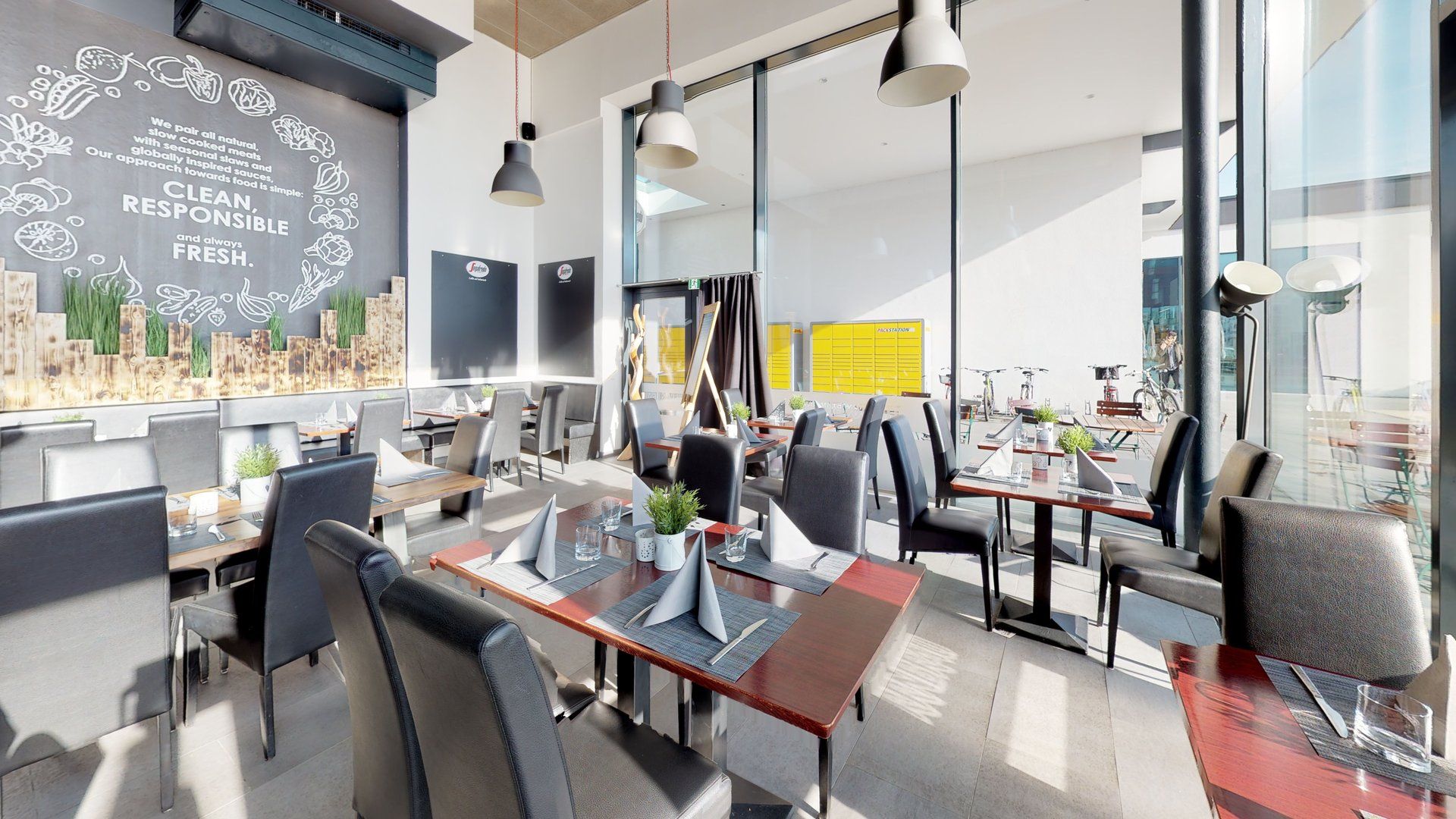
Zarrillo “Bellacucina”
Dining room and ambience of a restaurant — captured outside service hours.
What a tour achieves for restaurants
- Visibility
Straight into your Google profile
Anyone looking for a restaurant nearby in the evening often decides in the map view. With a Street View interior, guests see your dining room right there, before they read the first review.
- Private dining
Marketing rooms for celebrations
Birthdays, company events, weddings: being able to show side rooms and capacities produces more specific enquiries — and fewer viewing appointments.
- Expectation
No misunderstanding on arrival
Guests see in advance whether it is rustic or modern, bright or subdued, spacious or intimate. That prevents disappointment and the reviews that follow.
- Accessibility
Making access visible
Steps, door widths, where the toilets are: for guests with limited mobility this is the decisive information — and it is rarely on the website.
Restaurants live on an impression that is hard to describe. That is precisely why people search for images before visiting — and usually find plate shots and a corner of the bar.
A tour shows the room instead: how the tables are arranged, how bright it is, whether the family celebration would fit. For guests, that answers the question they were actually asking.
What guests see in a restaurant tour
Entrance, dining room, bar, terrace or beer garden, side rooms and the way to the toilets. Furnishings, materials, daylight and lighting shape the feel of a room, and that comes across well in a tour: dark wood and warm light feel different from pale tiles and large windows. What the tour does not show is the full evening with chatter and music — it shows the room in which that evening takes place. For many guests that is enough to know whether the venue suits the occasion: business lunch, first date, family celebration. Tourists and business travellers often do not know the town and choose from the map; a look into the dining room gives them more confidence there than an average star rating.
Celebrations, groups and events
For the events side of the business, the tour is a sales tool. Anyone planning a celebration wants to know how a long table could be set up, where the buffet would go and whether there is a separate entrance or cloakroom. The measuring tool lets them check room dimensions, and the schematic floor plan helps with table planning. Info points can link to your banqueting pack, set menus or the enquiry form. Enquiries then arrive with concrete ideas, and the site visit becomes the closing appointment rather than a first introduction.
Uses by type of venue
- Restaurants: dining room, side rooms and terrace — plus the rooms guests otherwise only see on request.
- Bars and pubs: bar counter, seating corners and smoking area. The tour shows whether there are quiet tables for two or whether the bar is more of a place for groups.
- Cafés: window seats, quiet corners, room for pushchairs.
- Country inns and day-trip destinations: function room, beer garden and playground — day-trippers often plan their visit from further away.
- Hotel restaurants: together with rooms and meeting spaces in one tour, see hotels and holiday homes.
What matters during capture
Tables laid or deliberately bare — both work, but it should be consistent throughout. Chairs straight, bar tidy, no delivery crates in the way. The board with today’s special is only right for one day; the menu belongs behind an info point, not in the picture. Set the lighting as it is during service, so the feel of the room is right. If you want to show a terrace or beer garden, plan the slot in season, when furniture and parasols are outside. Few restaurants show their kitchen; if yours is an open kitchen, include it deliberately and make sure nobody is preparing food there during capture.
Frequently asked questions
Your question is not listed? Ask us directly.
When can you capture?
Before service or on closing days, so no guests appear and the rooms look tidy. How long the capture takes depends on floor area and layout — dining room, terrace and side rooms add up. We clarify the time needed during the walk-through.
Is it better than good photography?
Not for the menu — photos win there. For rooms, ambience and layout it is, especially if you market private events or have several areas that blur together in photos.
Do we get the tour into Google Maps?
Yes, and for restaurants that is usually the biggest lever. We capture the interior so it can be linked to your business profile.
What if we redecorate or refurbish?
Seasonal decoration is not an issue. For a real refurbishment we re-capture — usually cheaper than the first time, as the workflow and positions are known.